

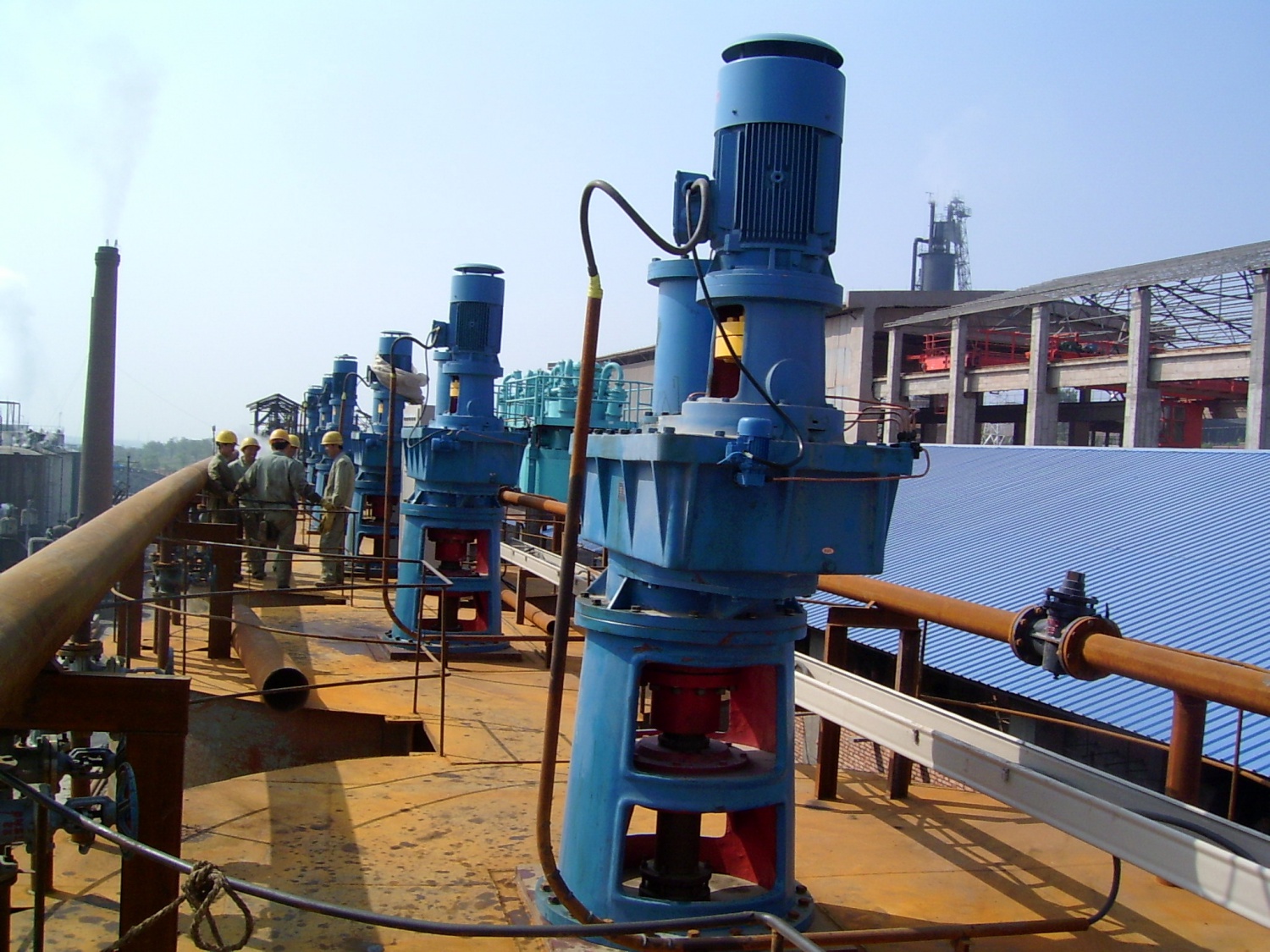


Wastewater Treatment Mixers
Interview

FLOCCULATION – Flocculation is the agglomeration of colloidal particles into a larger mass call “floc particles”. Agitation increases the opportunity for particle contact, improving the flocculation efficiency.
• The Lunron's hydrofoil impeller is ideal for this application, promoting large fluid movement and therefore maximizing particle contact while minimizing shear and turbulence to prevent floc damage.
FLASH – Mixers are used to uniformly disperse chemicals, such as coagulant aids, chlorine and sulfur dioxide into the process stream in very short retention times. These chemicals are added for the purpose of solids removal, neutralization, odour & colour control.
• The conventional configuration is a top entry mixer in a rectangular basin with impellers selected to maximize dispersion while preventing short circuiting..
CARBON MAKEUP – Adsorption is the process of removing the soluble and particulate impurities from the process water by contacting the process stream with activated carbon.
• Mixers are used to wet-out the dry activated carbon into a slurry, then to maintain uniform suspension and finally to re-suspend the carbon after periods when the mixer has been shut-down. Impeller selection is critical to successfully accomplish all of these requirements.
CHEMICAL MAKEUP – Polymers can be provided as either dry powder or in a concentrated liquid form. In either case dilution is required before addition to the process.
• Mixer sizing is based on viscosity, which has a very broad range, and therefore it is important to know the polymer characteristics for each application.
SLUDGE MIXING – Sludge Blending requires agitation to ensure a homogeneous mixture is obtained from various sludge sources.
• Sludge tanks require mixers to keep solids from settling, maintain uniform consistency and can also be used to blend chemical additives into the sludge for more efficient dewatering.
EQUALIZATION / NEUTRALIZATION – Flow Equalization is the damping of flow rate and concentration variations so that a constant or near constant stream is achieved to the plant. Neutralization is the process of blending acid or caustic into the waste stream to adjust the pH level of the basin.
• Equalization mixers are used to blend influents from various sources to provide a uniform consistency.
• Neutralization mixers ensure proper pH levels are achieved before entering the next process steps.
CHLORINE CONTACT – Chlorine is used as a disinfectant to rid the effluent of any residual microorganisms.
• Mixers ensure that the added chlorine is thoroughly dispersed into the effluent stream for maximum effectiveness.
ANOXIC MIXERS – Anoxic zones are used to facilitate denitrification using bacteria to convert nitrates to nitrites and finally to nitrogen gas which is released from the basin.
• Agitation is required to blend the basin contents to increase process efficiencies.


 Copy product links
 Long by picture save/share
INQUIRY


Add Successfully
INQUIRY
Add Successfully


Shanghai Sharpe Mechanical Equipment Co;,Ltd copy rights
Website: www.lunronmixer.com Email: sales@lunronmixers.com
Shanghai Sharpe Mechanical Equipment Co.,Ltd copyrights
 客服1
客服1 客服2
客服2